UX FOUNDATIONS
Models, Doodles and Frameworks.
Joining as the first designer meant starting from zero - no process, no tools, no product culture. This is the story of what had to happen before a single screen could be designed - and why getting the foundations right changed everything that followed.
Research & Discovery
Info Architecture
Established the UX foundations - research, thinking models and a lot of workshipping. The invisible work that made everything else visible.
TL;DR
Get in Touch
First Principles
THE PROBLEM / CONTEXT
The V1 had proved the market demand. The next challenge was building a product worthy of that signal. Something that didn't just engage users but gave organisations a new lens entirely: a Net Safety Score that could quantify behavioural risk and resilience for the first time.
THE ASK
Build the core product that scales, a design team from scratch. Conduct the foundational research, establish the UX frameworks, and create the conditions for good product thinking to take root in an organisation that was encountering it for the first time.
Quick questionnaires/surveys and interviews helped me gauge core market need, understanding two sets of
end-users, their challenges and context.
First draft of my questionnaire
(evolved to multiple versions over time)
Understanding the turf
What problem are we really solving?
Why does this problem exist?
Who does this problem affect and how?
How are we equipped to solve this?
What are core insights of our V1 App?
Do our Dashboard Users care about this problem?
Example Questions:
What we learnt
A summary of issues, hurdles and limitations faced by the Industry and its workers. Utilising the findings from our own research, secondary research and business intel - we segregated our insights at Industry, Org and User level.
Explore Insights -
WHAT NEXT?
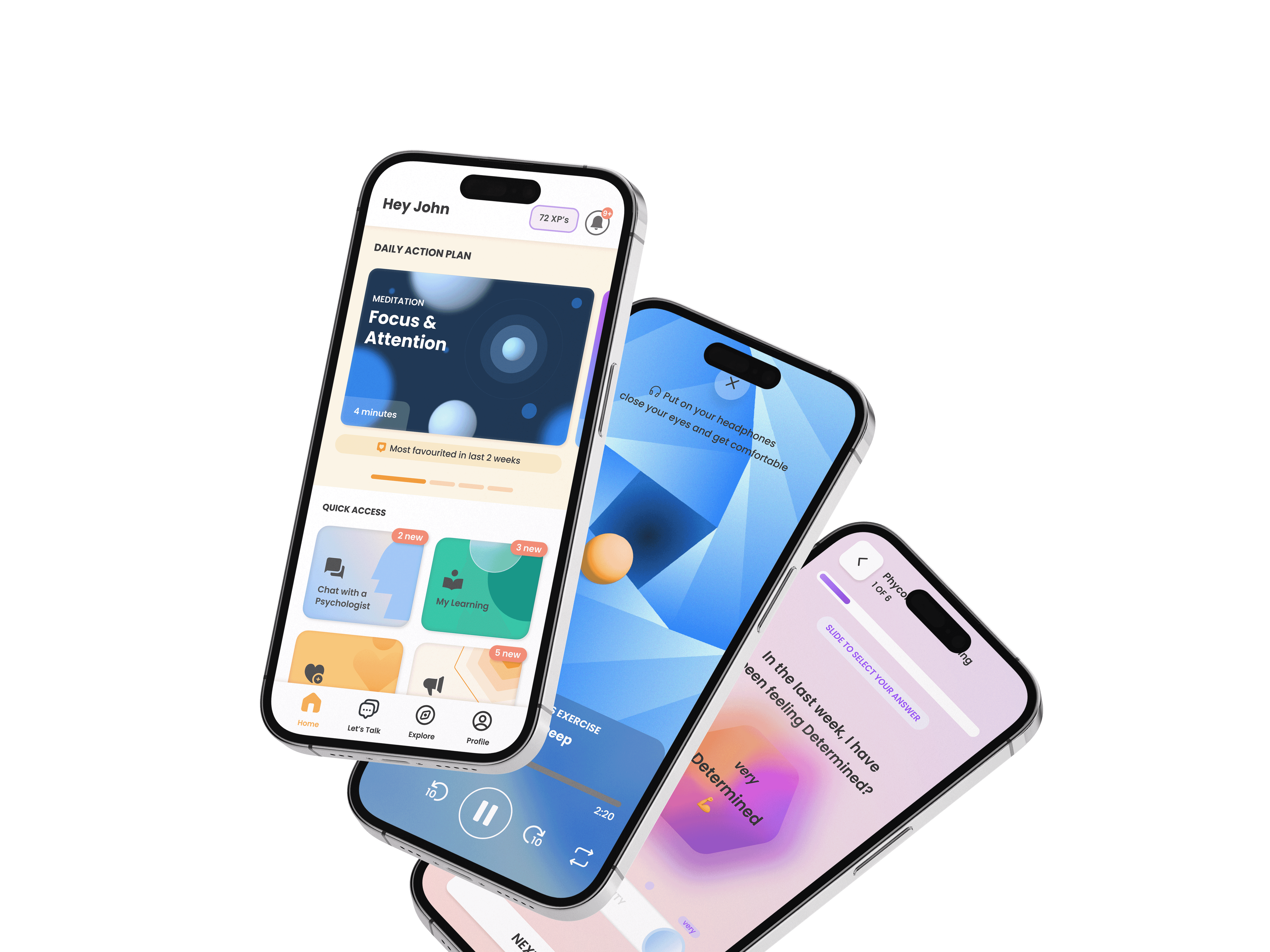
🛠️ bUILDING A HOMEPAGE That's
UX RETENTION GOALS
Familiarity over experimentation
Picking a Navigation Model That Scales
Mental Models Worth Keeping
Three thinking tools that actually got used in the wild and moved
things forward on the crazy days.
By asking the right questions
Getting my team to care about the problem
And when to not reinvent the wheel
My Decision Filter for Innovation
The WORKSHOPPING board
• APP BRIEF •
Build a multi-utility app that helps
Frontline workers cope with daily stressors and build resilience.
• APPROACH •
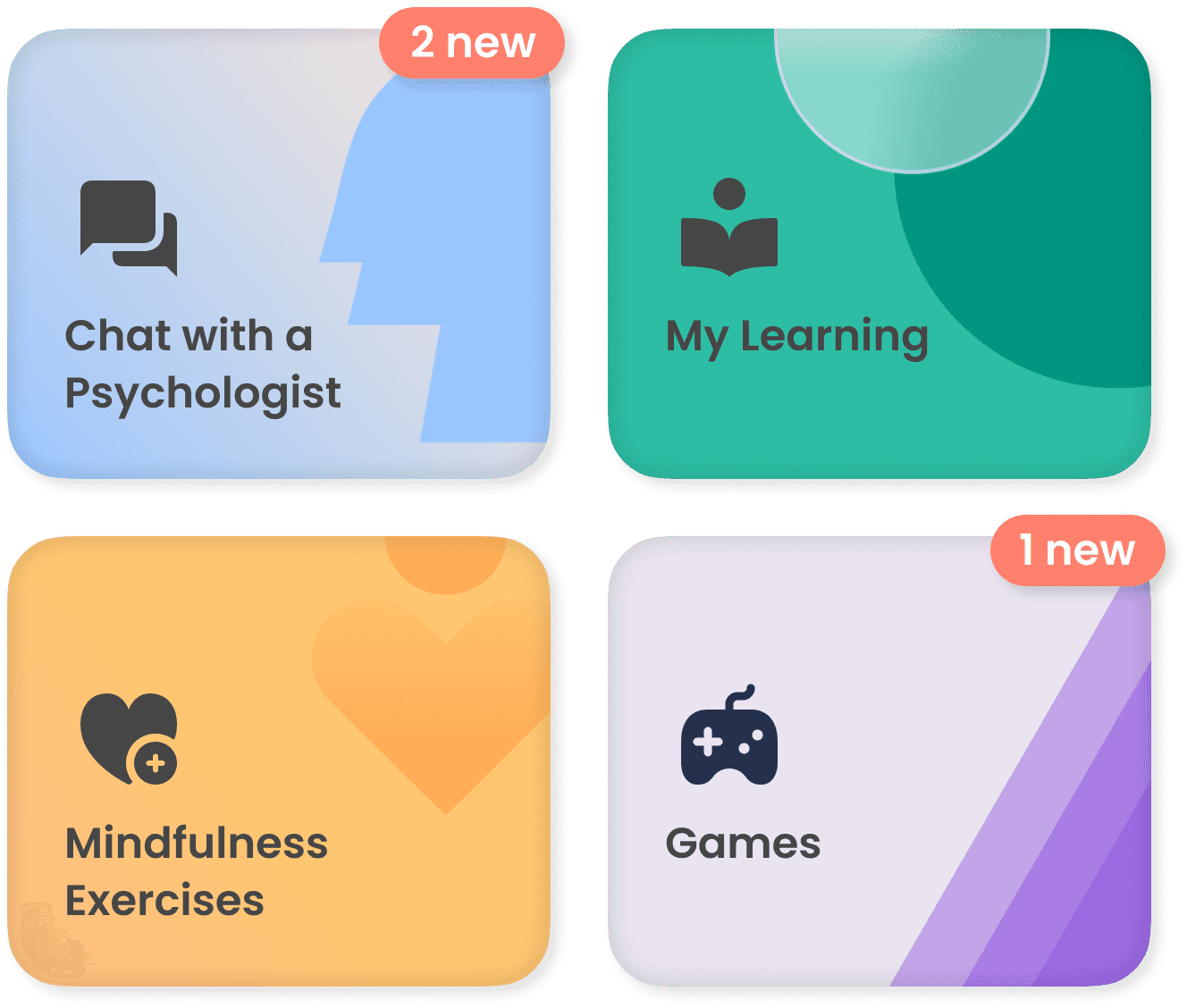
By helping Users identify their thresholds within 6 Wellbeing dimensions via -
• Direct psychological support
• Mindfulness exercsies
• Learning modules
• Cognitive games
Few key directions and themes started emerging
These rich features were then planned and built out over the course of coming months.
• THE STRATEGIC ANCHOR •
V1 had already shown us something valuable - Users spent significant time on the app voluntarily, offline, at sea. Some features had genuine traction and we let that behaviour lead. The new experience was anchored in
self-discovery and flexible engagement. Built for the reality of life at sea.
The truth about 0-1 journeys is that
they are messy and non-linear.
Being the first designer, new challenges arose every day.
I had to work with incredibly short timelines, speed and limited data.
QUESTIONS i WAS DEALING WITH
What kind of team do I need to hire?
What do we build in-house vs What to hire vendors for
What should be our Tool Stack?
How do we plan for Dashboard and Mobile work in parallel?
How do we plan for Dashboard and Mobile work in parallel?